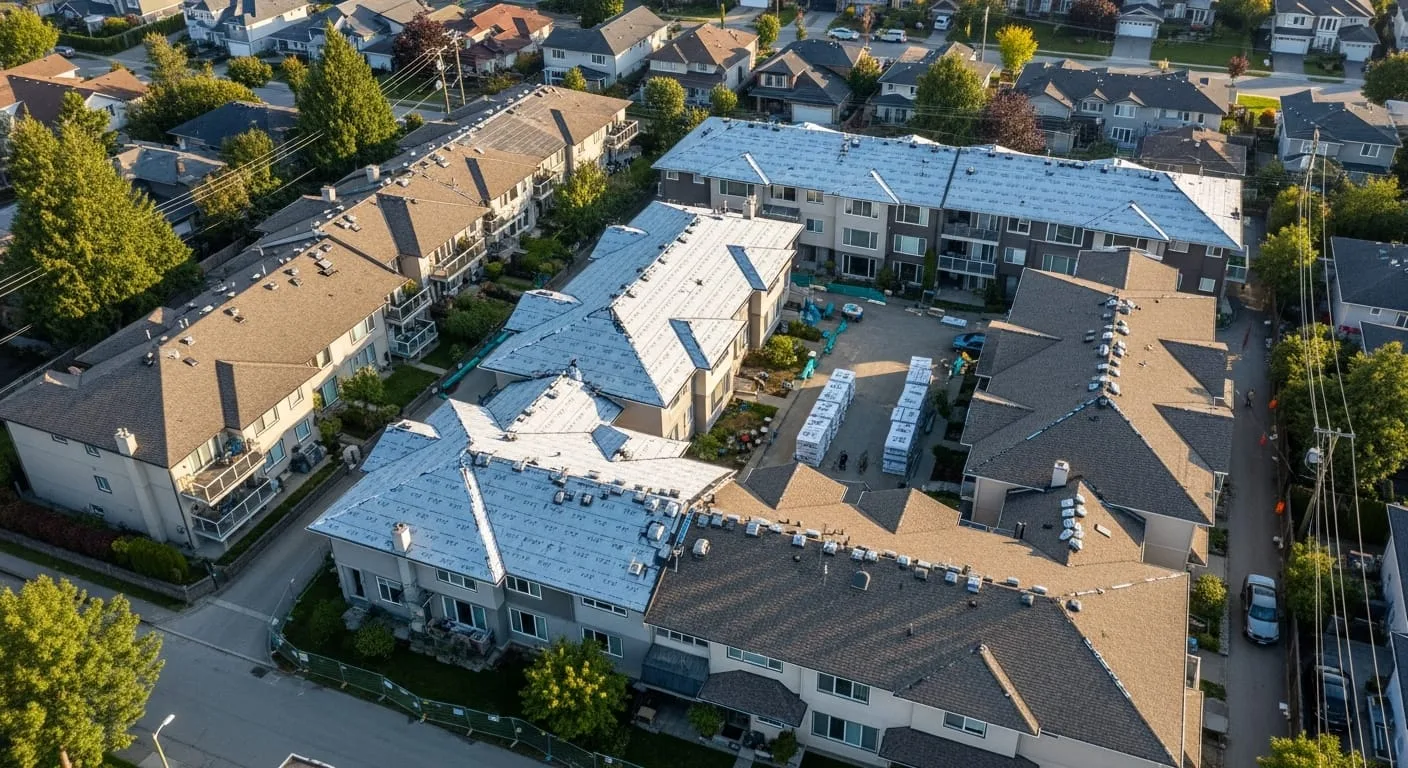
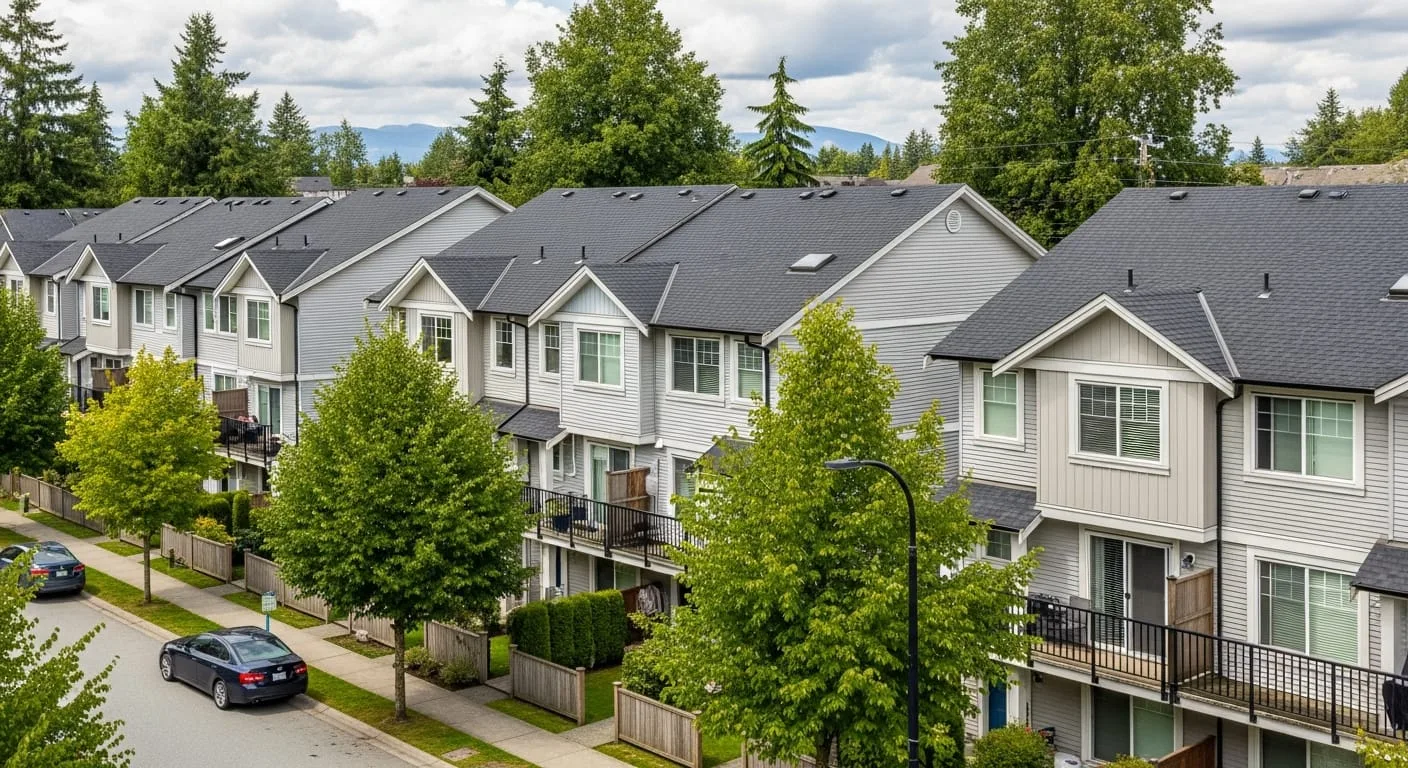
Strata Roofers for Repairs in Vancouver
Published April 12, 2026 · Updated May 15, 2026
Strata roof repairs in Vancouver demand fast diagnosis, RCABC-certified workmanship, and clear communication with the strata council. Our crews mobilize across Metro Vancouver — Burnaby, Surrey, Richmond, Coquitlam and the North Shore — typically within hours of your call to 604-446-3482.
Common Strata Roof Failures in BC
- Pinhole leaks in SBS torch-on flat roofs at parapet flashings
- Failed sealant at vents, skylights and HVAC curbs
- Wind-lifted concrete tiles and cedar shake fastener fatigue
- Ice damming and clogged scuppers after Pacific storm cycles
Our Repair Workflow
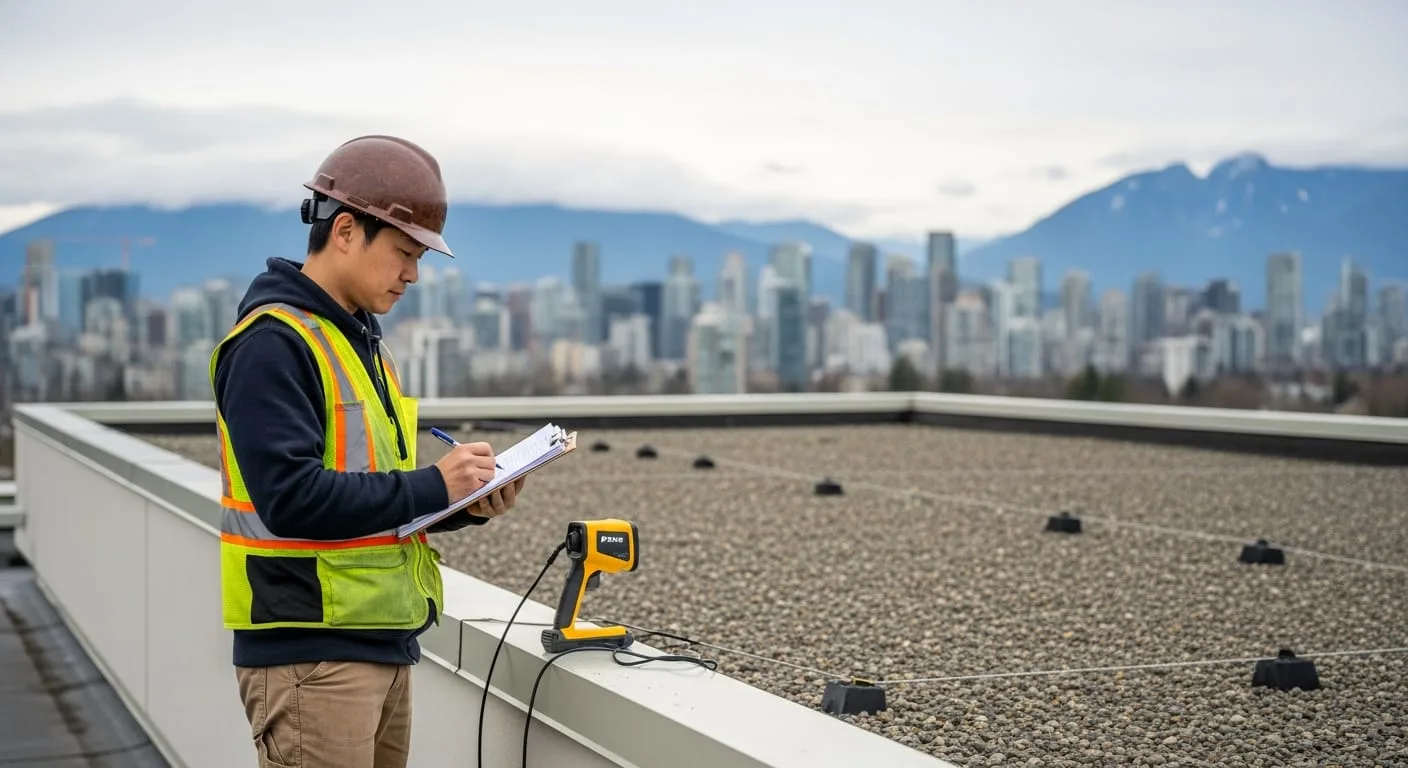
Every job starts with a thermal-imaging assessment and moisture mapping so the council sees exactly what's failing and why. We then issue a fixed-price scope, secure WorkSafeBC compliance docs, and complete the repair with photo documentation for your depreciation report.
Why Strata Councils Choose Us
Fully licensed, insured and bonded. Five-million-dollar liability coverage. RCABC Guarantee available on qualifying systems. References from over 200 strata corporations across the Lower Mainland.
Immediate Triage for Active Leaks: What Strata Councils Should Do
When an active roof leak is reported in a strata building, the council's first responsibility is to react swiftly and safely. The primary goal is to mitigate interior damage and protect residents. The first step should be to have the strata manager or a council representative contact a qualified emergency roofing contractor. Concurrently, efforts should focus on managing the water intrusion inside the affected unit. This includes placing buckets to catch drips, moving furniture and valuables away from the wet area, and using towels to contain the spread of water on floors. It is crucial to document the initial damage with photos and videos, noting the time the leak was first observed.
Safety is paramount during an active leak. If water is near electrical outlets, light fixtures, or appliances, the power to that section of the unit should be shut off at the breaker panel. Residents should be advised not to touch or use any electrical devices in the vicinity of the leak. Cordoning off the affected area with caution tape or cones can prevent accidental slips and falls on wet surfaces, especially in common areas. The council should communicate clearly with the affected residents, assuring them that a professional is en route and advising them on these immediate safety precautions.
The Decision: Temporary vs. Permanent Repairs
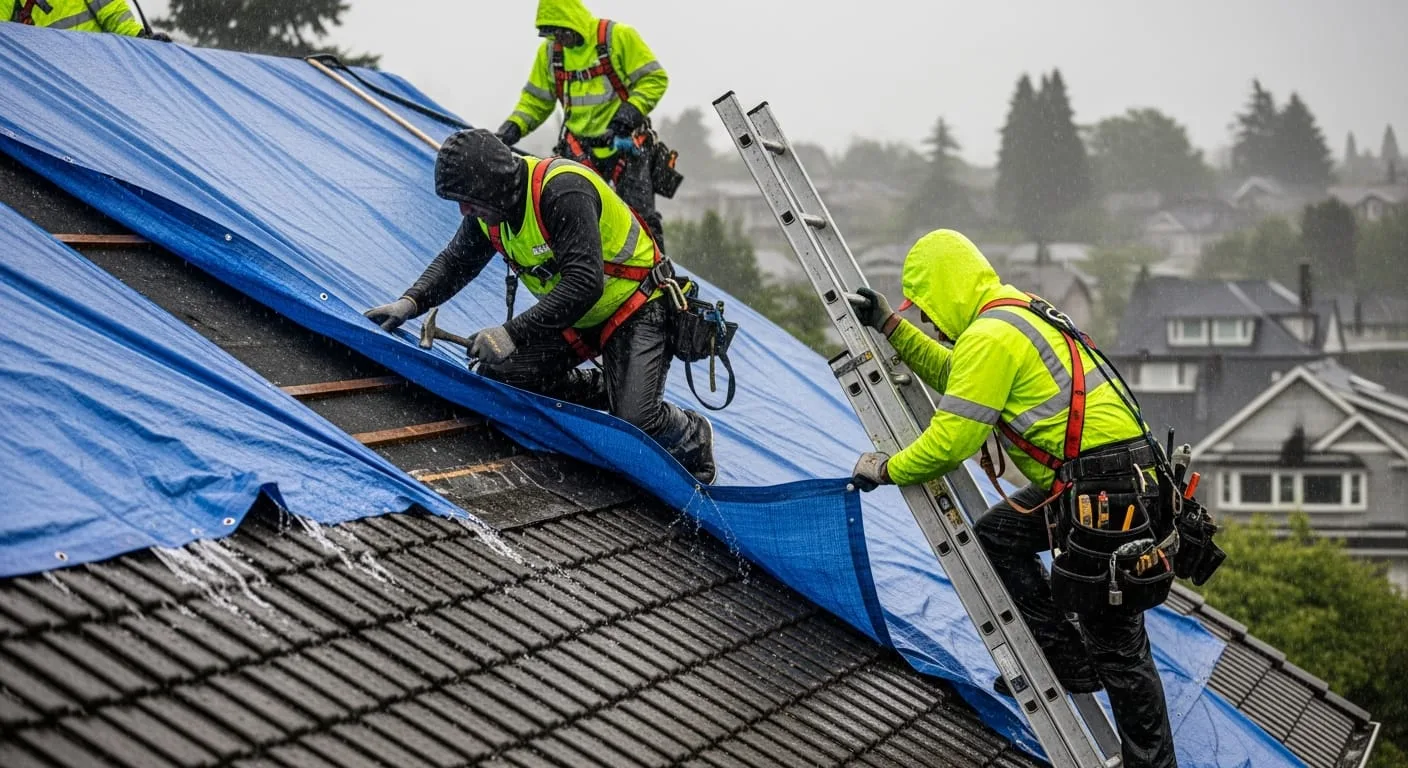
Upon arrival, a roofing professional's first priority during an active leak—especially in Vancouver's rainy season—is to stop the water intrusion. This often necessitates a temporary repair. The decision to perform a temporary fix versus a permanent one is dictated by weather conditions, the extent of the damage, and the materials required. A permanent repair on systems like SBS torch-on roofing may require dry conditions and specific temperatures to ensure proper adhesion and curing, which is often not feasible during a downpour. Therefore, temporary measures are a professional and necessary step, not a shortcut.
When Temporary Fixes Are the Correct First Step
A temporary repair is designed to make the roof watertight until a proper, permanent repair can be scheduled and executed under suitable conditions. This might involve applying high-grade sealants, specialized tarping systems, or installing a temporary patch over the compromised area. These measures are critical for preventing further costly interior damage to drywall, insulation, and structural components. The roofer should document the temporary fix and provide the strata council with a clear report on what was done, along with a detailed proposal and timeline for the permanent solution.
Scheduling and Committing to a Permanent Solution
Following a temporary repair, the strata council must act decisively to schedule the permanent work. Delaying this can lead to the failure of the temporary patch, especially under the stress of subsequent storms, and may even be viewed as negligence by an insurer. The roofing contractor will provide a scope of work outlining the necessary steps for the permanent repair, which could involve removing the temporary materials, drying out the underlying substrate, replacing damaged components, and installing new roofing materials to match the existing system. The council should approve this work promptly to restore the integrity of the building envelope.
After the Storm: A Protocol for Proactive Inspections
Metro Vancouver is known for its intense wind and rain storms, which can wreak havoc on multi-family roofing systems. A prudent strata council will have a protocol for post-storm inspections. After a significant weather event, a visual inspection from the ground can be a useful first step, looking for dislodged shingles, damaged flashing, or debris accumulation. However, a professional inspection is highly recommended. A roofer can safely access the roof to check for more subtle damage that isn't visible from the ground, such as lifted membrane seams, cracked mastic at penetrations, or damage to rooftop equipment. This proactive approach can identify small issues before they become major leaks, saving the strata corporation significant money and disruption in the long run.
Navigating Roof Repair Insurance Claims
When a roof repair is significant enough to warrant an insurance claim, thorough documentation is the strata council's most powerful tool. From the moment the leak is discovered, every step should be recorded. Photos and videos of the initial leak, the interior damage, and the damaged roof area are essential. All communications with the roofing contractor, including their initial report, the quote for temporary repairs, and the proposal for permanent work, should be kept in an organized file. The strata’s insurance policy will have specific requirements and a deductible; understanding these upfront will streamline the claims process. Many strata insurance policies cover resulting interior damage but may have specific limitations on the roof repair itself, especially if the failure is due to age or lack of maintenance.
Essential Documentation for Your Insurer
- A detailed incident report, including the date and time the leak was discovered.
- Clear, dated photos and videos of the active leak and all affected interior areas.
- Photos of the roof's exterior, if safely possible, showing the source of the problem.
- Copies of the emergency roofer's initial assessment and invoice for temporary repairs.
- A detailed quote or proposal from the contractor for the permanent repair scope of work.
- Records of past roof maintenance and inspections to demonstrate due diligence.
When Does a Repair Become a Replacement?
A common dilemma for strata councils is determining the line between a large-scale repair and a full roof replacement. Several factors guide this decision, which often requires the expert opinion of a roofing consultant or an experienced contractor. The age of the roof system relative to its expected lifespan is a primary consideration. If a 20-year roof is in its 18th year and experiencing multiple failures, replacement is almost certainly more cost-effective. The frequency and location of leaks are also telling. If new leaks are appearing in different areas after each storm, it suggests systemic failure rather than an isolated problem. In these cases, continuing to patch the roof is a financially unsustainable strategy.
A general industry guideline sometimes referred to is the "50% rule." If the cost of repairs exceeds 50% of the cost of a full replacement, replacement is the logical choice. Furthermore, a comprehensive roof evaluation might reveal that the underlying insulation is saturated or the roof deck is compromised. In such scenarios, spot repairs are insufficient as they don't address the core problem. A full replacement allows for the remediation of all underlying issues, ensuring the long-term performance and integrity of the entire roofing assembly and protecting the strata's investment.
Minimizing Disruption: Working Around Occupants and Common Areas
Roof repairs in an occupied multi-family building require careful planning to minimize noise, disruption, and safety risks for residents. A professional roofing contractor will work with the strata council and manager to develop a logistical plan that addresses these concerns. This includes defining work hours, establishing clear pathways for crews and material transport, and designating specific areas for staging and waste disposal. For repairs directly over occupied units, interior access may be required, which must be scheduled with residents well in advance. Noise from tools and foot traffic is unavoidable, but providing residents with a clear schedule of work helps manage expectations.
Parking, Access, and Safety Logistics
Parking and site access are often the biggest logistical challenges. The strata council will need to communicate parking restrictions to residents, ensuring that designated areas are kept clear for work vehicles, material delivery trucks, and waste bins. The contractor should establish a secure perimeter around the work area on the ground, using caution tape and signage to prevent residents from accidentally entering a hazardous zone where debris could fall. Clear, consistent communication through notices in lobbies, emails, and updates from the strata manager is crucial for a smooth and safe repair project.
Seasonal Timing for Roofing Repairs in Metro Vancouver
The climate in Metro Vancouver presents unique challenges and opportunities for scheduling roof repairs. The long, rainy season from fall to spring means that roofing contractors must be adept at working within tight weather windows and performing effective temporary repairs to manage inevitable downpours. Ideally, extensive repairs and full replacements are scheduled for the drier summer months, from late June to early September. This period offers the best chance for the uninterrupted, dry conditions required for the proper installation of most roofing systems, particularly flat roofing like SBS torch-on, which requires heat for adhesion.
However, emergencies don't wait for good weather. Skilled BC roofers are equipped to handle repairs year-round. During the wet season, contractors will closely monitor weather forecasts to find short dry spells to perform permanent fixes. They may use fast-curing materials or erect temporary shelters over the repair area to protect it from rain during installation. The strata council should understand that scheduling during the rainy season may require more flexibility and could involve a multi-stage process, starting with a robust temporary repair followed by a permanent solution when a weather window opens up.
Permit Considerations for Strata Roof Repairs
While minor emergency repairs typically do not require a building permit, larger-scale repairs or projects that involve structural changes often do. The requirement for a permit varies between municipalities in the Lower Mainland. For example, if a repair involves replacing a significant percentage of the roof covering or altering the underlying roof deck or structure, a permit is likely necessary. Engaging a contractor who is knowledgeable about local municipal bylaws is essential. They can advise the strata council on whether a permit is needed and can often manage the application process on the strata's behalf. Proceeding without a required permit can result in stop-work orders, fines, and complications with insurance or future property sales.
Frequently Asked Questions
- How fast can you respond to an active leak?
- Most active leaks in Metro Vancouver are tarped within 2–4 hours of the call to 604-446-3482, 24 hours a day.
- Do you bill the strata directly?
- Yes. We invoice the strata corporation or property manager and provide CCDC-style documentation for council approval.
- Are you RCABC certified?
- Yes — we are an RCABC member contractor and can offer the RCABC Guarantee on qualifying roof assemblies.
- How fast can a roofer respond to an emergency leak call in Vancouver?
- Professional roofing companies that specialize in strata properties typically have dedicated crews for emergency service. In a major urban area like Vancouver, the goal is often to have a technician on-site within a few hours of the call, especially during a storm. Response time can be affected by traffic, the volume of calls during a major weather event, and your location. A good practice is to establish a relationship with a trusted roofing contractor before an emergency happens.
- What is the real difference between a temporary patch and a permanent repair?
- A temporary patch is a short-term solution designed purely to stop water from entering the building until conditions are suitable for a full repair. It often involves sealants or tarping. A permanent repair addresses the root cause of the failure. It involves removing the damaged materials, preparing the substrate, and installing new, compatible roofing components according to manufacturer specifications to restore the roof's long-term integrity. A permanent repair is warrantable; a temporary one is not.
- If we get a temporary repair, will our strata's insurance policy cover the cost?
- Most strata insurance policies encourage and cover the cost of 'reasonable and prudent' emergency measures taken to mitigate further damage. A professional temporary repair to stop an active leak falls squarely into this category. Be sure to keep detailed invoices and reports from your roofer as proof for your claim. The insurer's primary interest is in preventing a small problem from becoming a massive, expensive interior damage claim.
- How do you handle repairs over occupied units and minimize disruption?
- This requires a coordinated effort between the contractor, strata manager, and residents. A clear work schedule is communicated in advance, outlining noisy periods. For interior access, appointments are scheduled directly with the homeowner. Crews are instructed to be professional and respectful of private property. On the exterior, safety perimeters are established below the work area to protect residents from any falling debris. Consistent communication via notices and emails is key to managing expectations.
- What happens if a simple repair uncovers a much larger problem, like a rotted deck?
- This is a common scenario in roofing. If a roofer removes the failed membrane for a repair and discovers saturated insulation or rotted plywood sheathing, work must stop immediately. The contractor will document the new findings with photos and inform the strata council or manager. They will then issue a 'change order' or a revised proposal outlining the scope and cost of the necessary additional work. It is crucial to address these underlying issues, as simply patching over them will lead to premature failure of the new repair and continued deterioration.
Need a free assessment?
Licensed · Insured · Bonded roofing across Metro Vancouver.