Converting Cedar Shake to Asphalt Shingles on BC Strata Buildings
Published May 17, 2026 · Updated May 17, 2026
Across Metro Vancouver, thousands of townhouse and low-rise strata buildings built between 1985 and 2005 were originally roofed in #1 Blue Label cedar shakes. Today, almost every one of those buildings is facing the same decision: replace like-for-like at premium cost and rising insurance, or convert to a Class-A architectural asphalt system that lowers premiums, extends maintenance cycles, and meets modern wildfire interface code. This guide walks BC strata councils through that decision the way our project managers actually run it on site.
Why Cedar Shake Conversion Is Accelerating in BC
Three forces are pushing strata corporations off cedar shake and onto architectural asphalt. First, insurance: most major BC insurers now apply a 15–35% surcharge on buildings with combustible roofing, and a growing number are non-renewing cedar-roofed strata policies outright after a single claim. Second, replacement cost: hand-split #1 Blue Label cedar now runs $22–$32 per square foot installed, while comparable-lifespan architectural asphalt installs at $9–$14 per square foot. Third, code: municipalities in the wildland-urban interface — North Vancouver, West Vancouver, Squamish, parts of Coquitlam and the Sea-to-Sky corridor — require Class-A fire-rated assemblies on any permitted re-roof, which functionally rules out new cedar shake without a costly fire-retardant treatment program.
Insurance Math: The Real Number Behind the Conversion
On a 40-unit Burnaby townhouse complex with a $4,200 annual per-unit insurance premium, the cedar surcharge typically adds $600–$1,400 per unit per year. That is $24,000–$56,000 in extra premium across the strata every year — money that pays for the entire conversion in 12–18 years without considering the savings on the next replacement cycle.
Ask your broker for a written premium quote at renewal for both scenarios: keep cedar, and convert to Class-A architectural asphalt. Many councils discover the conversion is effectively self-funding once the insurance delta is amortized.
What 'Architectural Asphalt' Actually Means
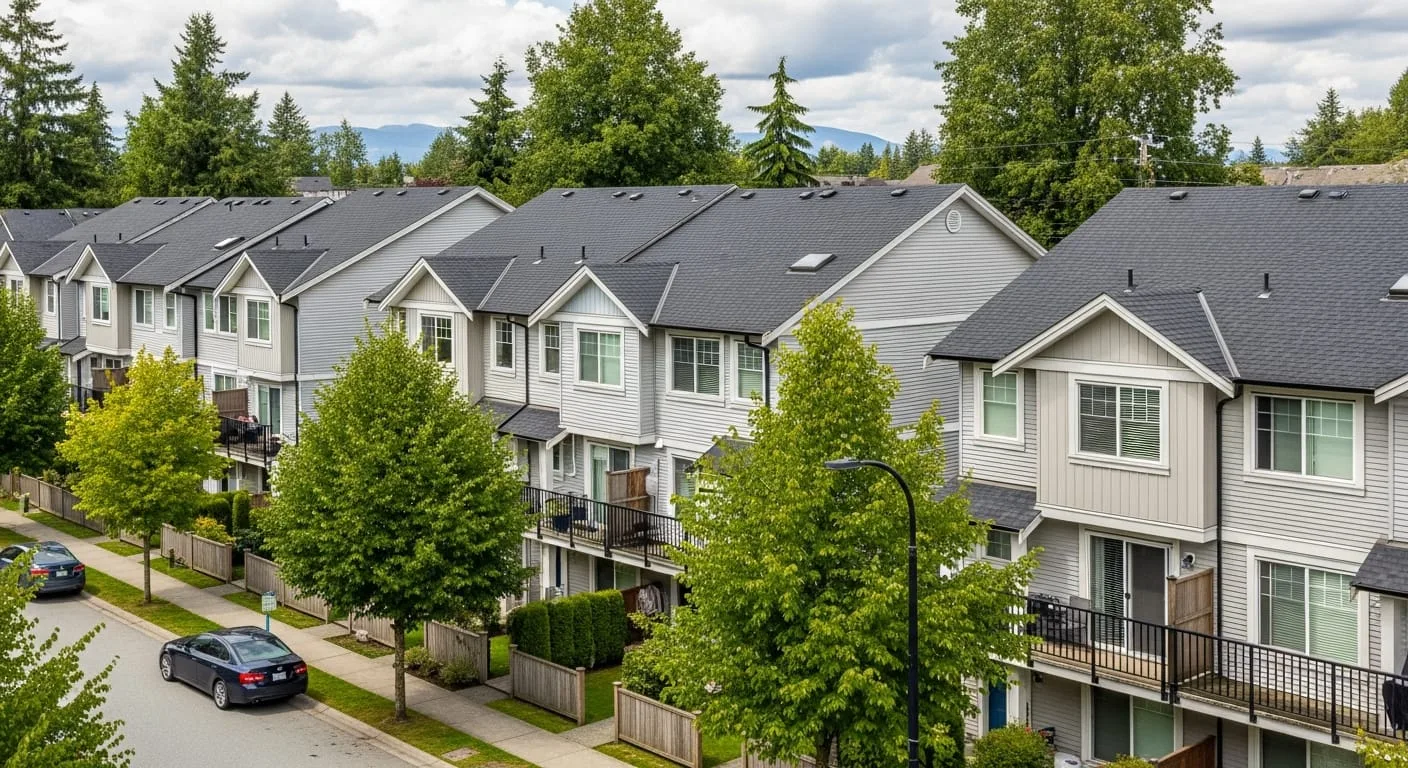
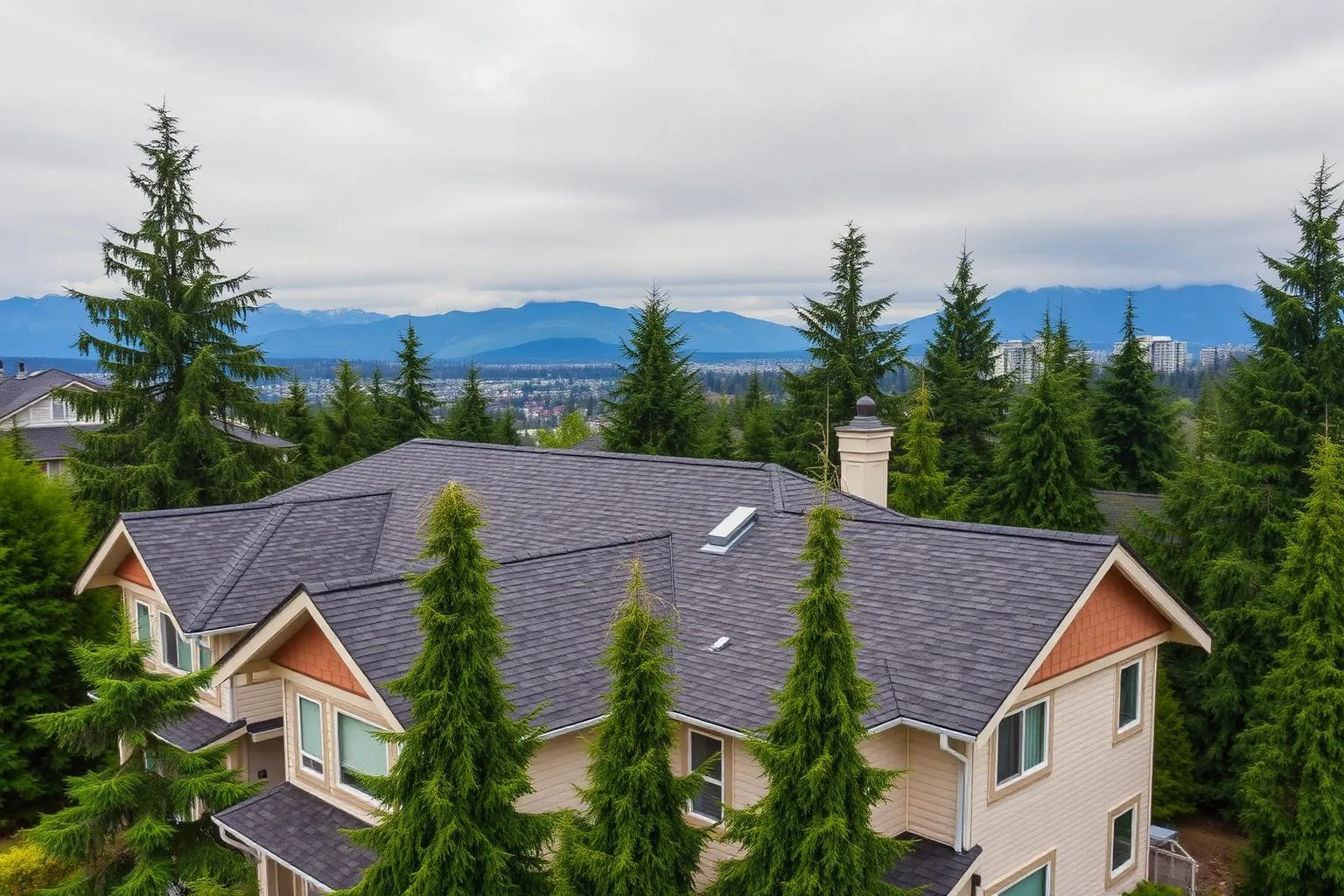
Architectural (also called dimensional or laminated) asphalt shingles are the modern standard for sloped multi-family roofing in BC. They are not the three-tab shingles of the 1990s. A premium architectural shingle is two-layer laminated, weighs 240–340 pounds per square, carries a 50-year limited manufacturer warranty, and is rated for sustained winds of 110–130 mph — well above anything the Lower Mainland has recorded.
All major manufacturers — Malarkey, IKO, GAF, CertainTeed, Owens Corning — produce a Class-A fire-rated architectural product suitable for strata work in BC. We typically specify SBS-modified premium architectural (Malarkey Vista or Legacy, IKO Dynasty) for the Pacific Northwest climate because SBS modification dramatically improves cold-weather flexibility and granule retention.
Lifespan Comparison
- Hand-split cedar shake, untreated: 18–25 years in coastal BC, with moss treatment every 3–4 years
- Pressure-treated cedar shake: 25–30 years, requires recoat every 5–7 years
- Standard architectural asphalt: 25–30 years, minimal maintenance
- SBS-modified premium architectural: 30–40 years, minimal maintenance
When you factor in the moss treatment, recoat, and partial shake replacement that cedar requires every few years, life-cycle cost of architectural asphalt is roughly 45–60% lower than cedar over a 30-year horizon.
The Conversion Process — Step by Step
1. Pre-construction engineering and council approval
Cedar shake on skip-sheathing weighs about 350–450 pounds per square. Architectural asphalt requires solid plywood or OSB sheathing and weighs 240–340 pounds per square — a net decrease in dead load. A structural engineer typically signs off in a single half-day visit. Council approval and AGM resolution follow standard Strata Property Act process.
2. Tear-off and skip-sheathing replacement
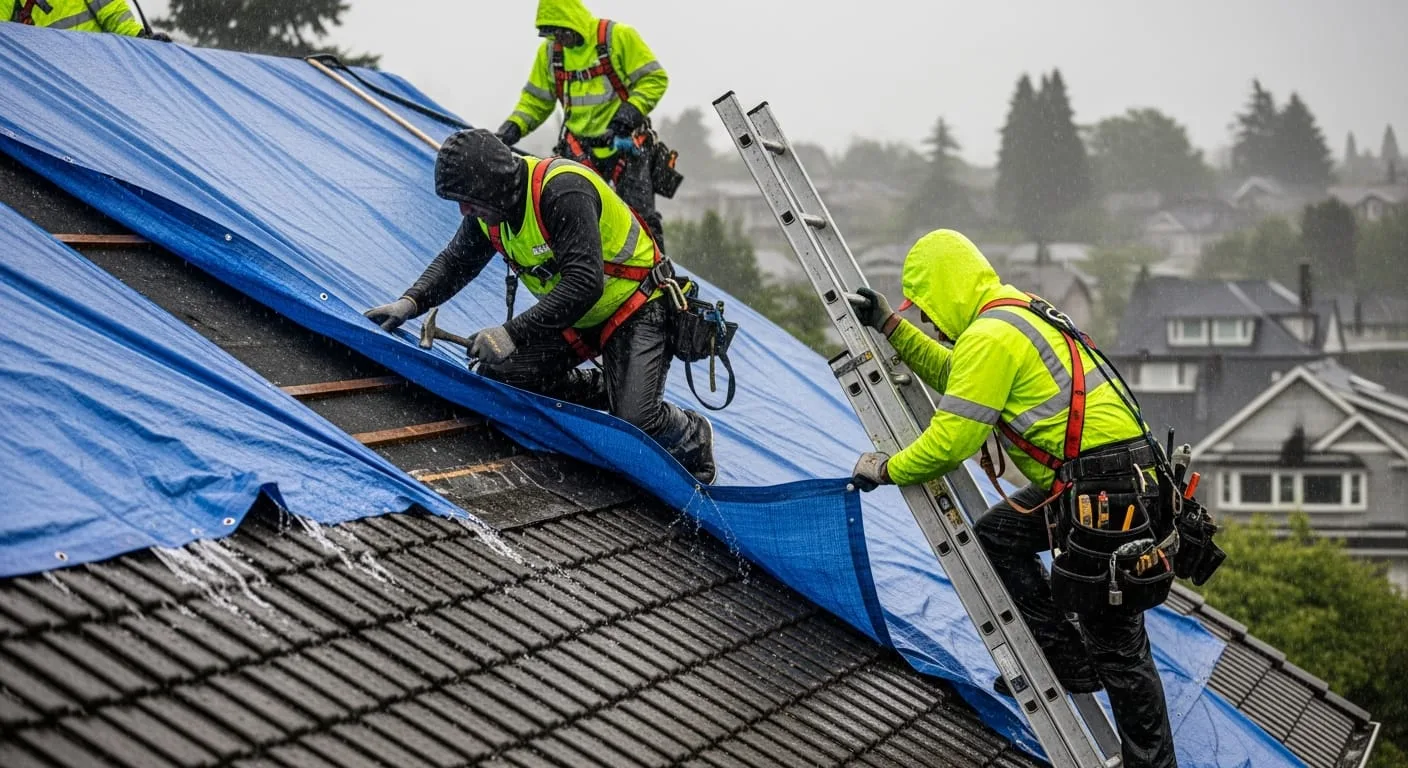
Cedar shake roofs in BC are almost always laid on 1x4 or 1x6 skip-sheathing — open spacing that lets shakes breathe. Architectural asphalt requires continuous sheathing. The tear-off crew strips shakes, removes skip-sheathing, and installs 5/8" plywood or 7/16" OSB sheathing nailed to the rafters. Budget $3.50–$5.50 per square foot for this conversion step alone.
3. Underlayment, ventilation upgrades, and ice-and-water
We install a synthetic underlayment over the new sheathing, with ice-and-water shield in valleys, around penetrations, and along eaves to a minimum of 24 inches inside the heated wall line. Most cedar-era buildings have inadequate attic ventilation by current code; we install continuous ridge vents and add intake baffles where needed to achieve the 1:300 net-free-area ratio.
4. Shingle installation, flashings, and ridge cap
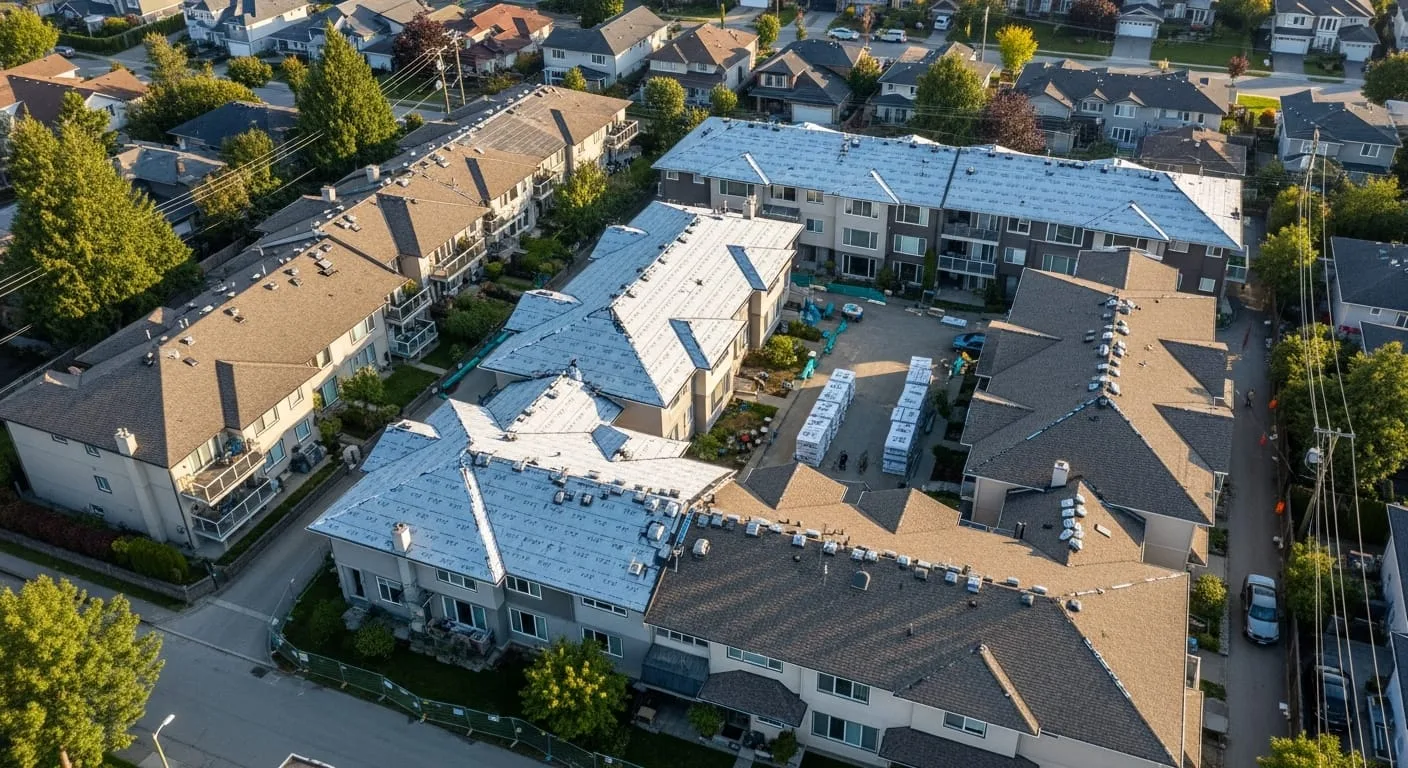
Six-nail installation is standard on multi-family. All step, valley, and penetration flashings are replaced with new pre-finished metal — never reused. Hip and ridge cap is the matching architectural product, not three-tab. A typical 40-unit townhouse takes 4–6 weeks of crew time, scheduled in 4–6 unit clusters so residents are only directly impacted for 3–5 days each.
5. Owner communication and disruption management
On strata conversions, the project manager matters as much as the roofer. Each unit receives 14-day, 7-day, and 24-hour notices. Daily start and stop times are published. A site supervisor is on property every working day. Issues — driveway parking, pet safety, satellite dish removal — are handled in writing with photo documentation.
Budget Range for a Typical Conversion
For a representative 40-unit Metro Vancouver townhouse complex with about 60,000 square feet of total roof area, a complete cedar-to-architectural conversion in 2026 runs $720,000 to $980,000 fully installed, including engineering, permits, sheathing upgrade, ventilation work, and disposal. That is roughly $18,000 to $24,500 per unit, typically financed through a special levy amortized over 10–15 years at well under $200 per unit per month.
Mistakes to Avoid
- Specifying three-tab shingles to save money — they are not suitable for multi-family and void most strata insurance discounts
- Skipping the sheathing replacement and installing asphalt over skip-sheathing with plywood overlay — guaranteed sag and premature failure
- Using a residential contractor with no strata project-management experience — disruption and complaint volume become unmanageable
- Forgetting to update the building envelope insurance schedule after conversion — owners continue paying the cedar surcharge for years
Get a Conversion Assessment
Strata Roofers BC has converted more than 90 cedar-shake strata buildings to architectural asphalt across Metro Vancouver. For a no-obligation site assessment, engineering review and insurance-impact letter for your council, call 604-446-3482 or email admin@budgetroofers.ca.
Frequently Asked Questions
- How much does it cost to convert cedar shake to asphalt shingles on a BC strata?
- In 2026, a complete conversion on a Metro Vancouver townhouse complex runs $12–$16 per square foot installed, including tear-off, skip-sheathing replacement, plywood, underlayment, Class-A architectural shingles, and all new flashings. A typical 40-unit complex costs $720,000–$980,000.
- Will converting from cedar shake to asphalt lower our strata insurance?
- Yes — almost always. BC insurers typically apply a 15–35% surcharge on buildings with combustible cedar roofs. Conversion to a Class-A fire-rated architectural asphalt system removes the surcharge and often unlocks a multi-year premium credit.
- Do we need a structural engineer to convert from cedar to asphalt?
- Yes, but it is a quick sign-off. Cedar shake is heavier than asphalt, so the conversion reduces dead load. A licensed structural engineer typically completes the review in a single half-day site visit.
- How long does a 40-unit townhouse cedar-to-asphalt conversion take?
- 4–6 weeks of total crew time on site, scheduled in 4–6 unit clusters so individual owners are only directly impacted for 3–5 days each.
- Are architectural asphalt shingles really as long-lasting as cedar?
- Yes — and often longer. Premium SBS-modified architectural shingles deliver 30–40 years in BC's coastal climate with minimal maintenance, compared to 18–25 years for untreated cedar shake with mandatory triennial moss treatment.
- Can we keep cedar shake if we want to?
- Generally yes, except in designated wildland-urban interface zones where Class-A is mandatory. But you should weigh ongoing insurance surcharges, treatment costs, and a higher replacement-cost-per-year before deciding.
Need a free assessment?
Licensed · Insured · Bonded roofing across Metro Vancouver.