Strata Roof Replacement in Maple Ridge, BC: A 2026 Council Guide
Published June 17, 2026 · Updated June 17, 2026
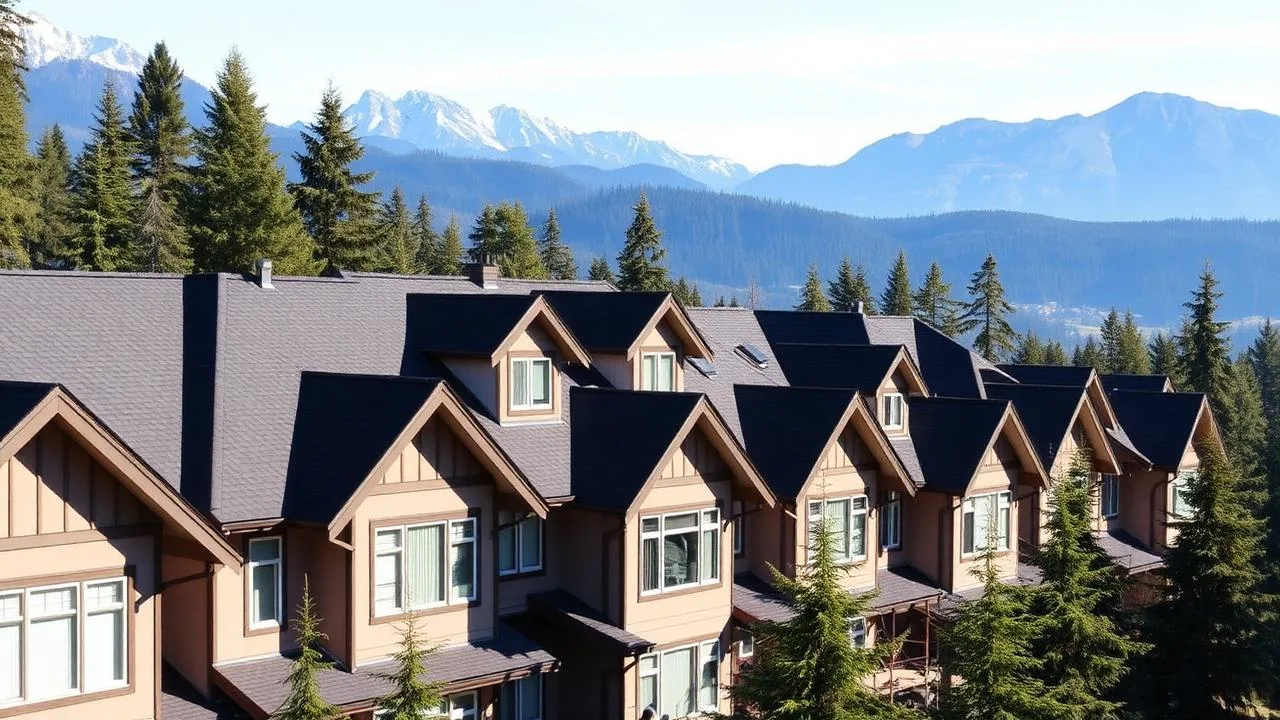
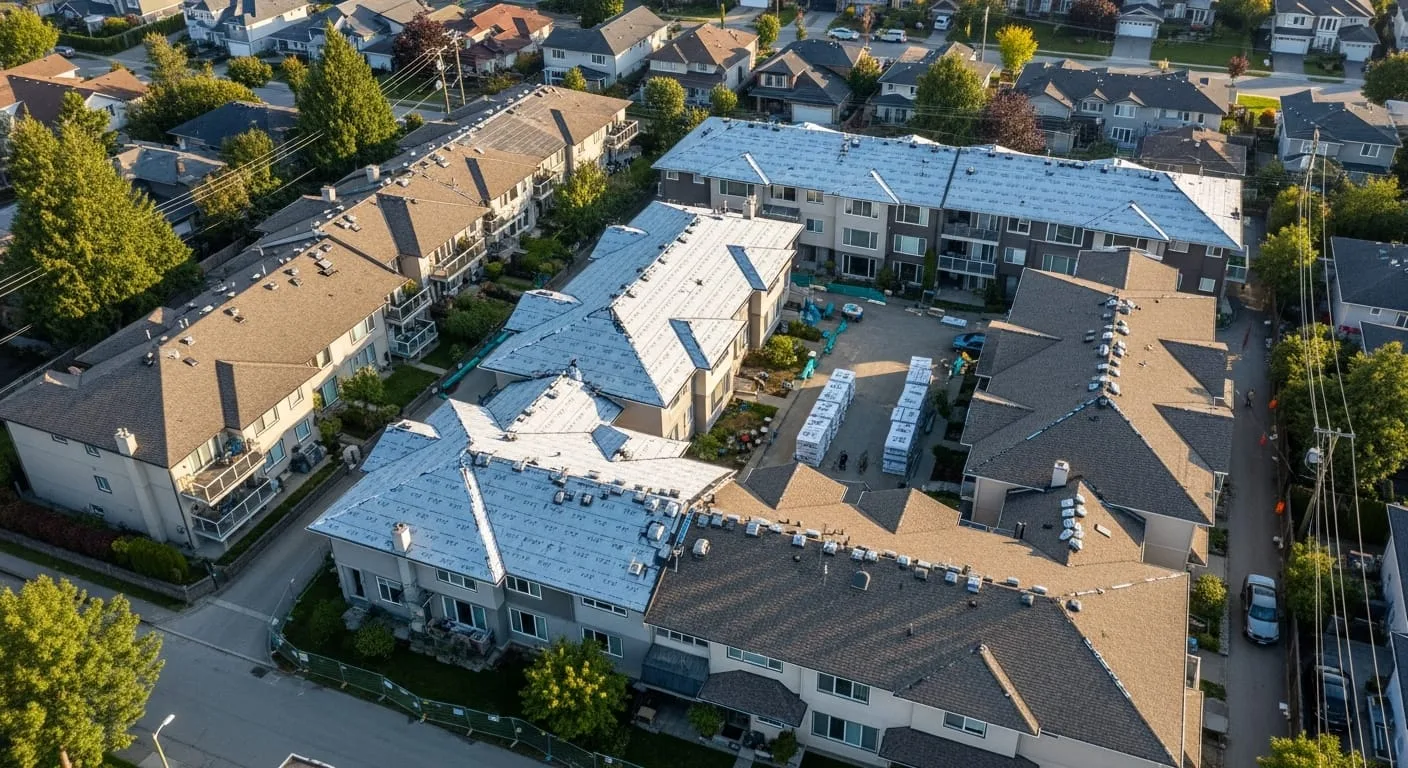
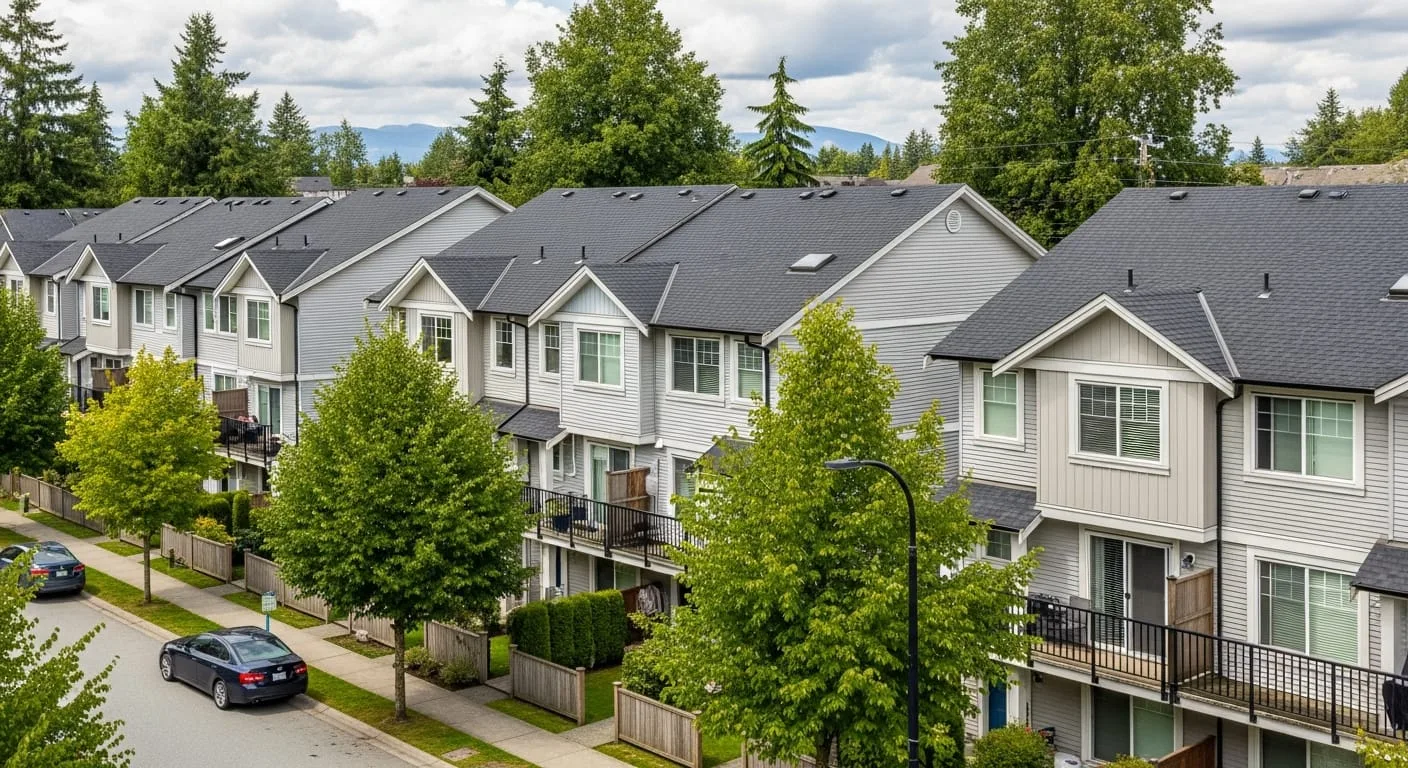
Maple Ridge has grown faster than any other Tri-Cities municipality over the past decade, and the strata building stock has grown with it. The catchment spans 1990s and early 2000s townhouses in West Maple Ridge and Cottonwood, mid-2000s and 2010s expansion in Albion, Silver Valley and Kanaka Creek, and a handful of newer mid-rise condo developments along Lougheed Highway and around the West Coast Express stations. Much of that stock is now reaching the 18- to 25-year service-life window where asphalt shingle, ridge ventilation and flashings are all approaching end of life simultaneously. This guide is written for Maple Ridge strata councils planning a 2026 or 2027 replacement.
What Makes Maple Ridge Roofs Different
Three Maple Ridge-specific factors shape every re-roof decision. First, elevation: much of Silver Valley, Cottonwood and the north-facing slopes of Albion sit between 100 and 350 metres above sea level, putting them firmly in a higher wind-load zone than the rest of the Fraser Valley and into the snow accumulation belt that begins around 200 metres. Second, forest setbacks: most Maple Ridge stratas are sited within or adjacent to mature Douglas fir and cedar canopy, which drives moss colonization, ventilation challenges and accelerated organic loading on roofs. Third, access geometry: many Silver Valley and Albion sites are built on steep grades with single-lane drive aisles that constrain equipment and dump-trailer staging.
The combined effect is that Maple Ridge projects reward contractors who specify wind- and snow-rated assemblies, moss-suppression detailing, and a written site-access plan — and punish contractors who import a flat-land Surrey spec without modification.
Realistic 2026 Cost Ranges for Maple Ridge Strata
- Architectural asphalt shingle tear-off and replacement, flat-lot West Maple Ridge: $10.00 to $13.00 per square foot
- Architectural asphalt with moss-suppression detailing, forested Silver Valley sites: $11.50 to $14.50 per square foot
- Cedar shake to asphalt conversion: $14.00 to $18.00 per square foot
- Standing-seam metal roofing (snow-load advantaged on elevation sites): $19.00 to $26.00 per square foot
- Sheathing replacement allowance (typical Maple Ridge rate 8 to 15 percent): $5.00 to $7.50 per square foot of replaced area
A typical 28-unit Albion or Silver Valley townhouse complex with 22,000 square feet of roof area should budget approximately $255,000 to $325,000 in 2026 for an architectural shingle re-roof with moss-suppression detailing, including a 12 percent sheathing contingency, engineering, permits and waste disposal. Cedar-to-asphalt conversions run 15 to 25 percent higher. Standing-seam metal upgrades, increasingly chosen on elevation sites for snow shedding and 40+ year service life, sit at the top of the range.
City of Maple Ridge Permits
Maple Ridge requires a building permit for any strata roof replacement that involves more than simple re-cover, including any tear-off-and-replace project, any sheathing replacement above 10 percent of roof area, any change in roof assembly type, and any ventilation modification. Applications require manufacturer documentation, a waste-management plan, WorkSafeBC notice of project, and — for cedar conversions and standing-seam metal upgrades — a sealed engineer's letter confirming structural adequacy under both the new dead load and the elevation-adjusted snow load.
Maple Ridge permit review in 2026 typically runs 3 to 5 weeks for a complete submission, comparable to Surrey and faster than the District of North Vancouver. The City has been particularly active on tree-protection compliance since 2024 on sites adjacent to designated environmentally sensitive areas, and applications missing a tree-protection plan on forested sites are routinely sent back at first review.
Wind, Snow and Elevation Specification
Maple Ridge sites above 150 metres elevation should specify a 130 mph high-wind warranty asphalt shingle with 6-nail fastening, hand-sealed starter strips, and high-profile ridge caps mechanically fastened over a continuous ridge vent. Sites above 250 metres should add snow guards on slopes above 6/12 pitch where snow shedding onto walkways, driveways or adjacent buildings creates a winter safety hazard. The incremental cost is roughly $0.50 to $0.90 per square foot and is the single best-value upgrade in any Maple Ridge re-roof scope.
For Silver Valley and Cottonwood sites above 300 metres, councils should seriously evaluate standing-seam metal roofing as a long-term alternative to asphalt. The 2.0x to 2.5x material premium delivers a 40- to 50-year service life, eliminates moss replacement cycles, sheds snow naturally, and produces a meaningful insurance premium reduction at most carriers. The right answer depends on the council's holding-period assumptions, but the metal option is increasingly selected on elevation sites that previously defaulted to asphalt.
Forest Setbacks, Moss and Tree Protection
Almost every Silver Valley, Albion and Cottonwood strata sits within or adjacent to mature evergreen stands. The practical consequences for re-roofing are three. First, moss colonization rates are 2 to 4 times higher than flat-land sites, and any asphalt product should be specified with copper or zinc strip detailing at ridges to suppress moss growth — adding $0.40 to $0.75 per square foot but extending service life by 4 to 7 years. Second, ventilation has to compensate for the cooler, damper microclimate under tree canopy; under-ventilated assemblies in forested sites fail at the underside of the sheathing within 8 to 12 years. Third, tree-protection fencing, crown-cleaning and root-zone protection during dump-trailer staging are line items the contractor must price into the bid.
Bids that ignore tree-protection requirements on Silver Valley or Cottonwood sites are functionally non-compliant — they will either trigger a stop-work order or generate damage claims from owners whose mature plantings are crushed by a 40-foot trailer.
Working Around Maple Ridge Weather Windows
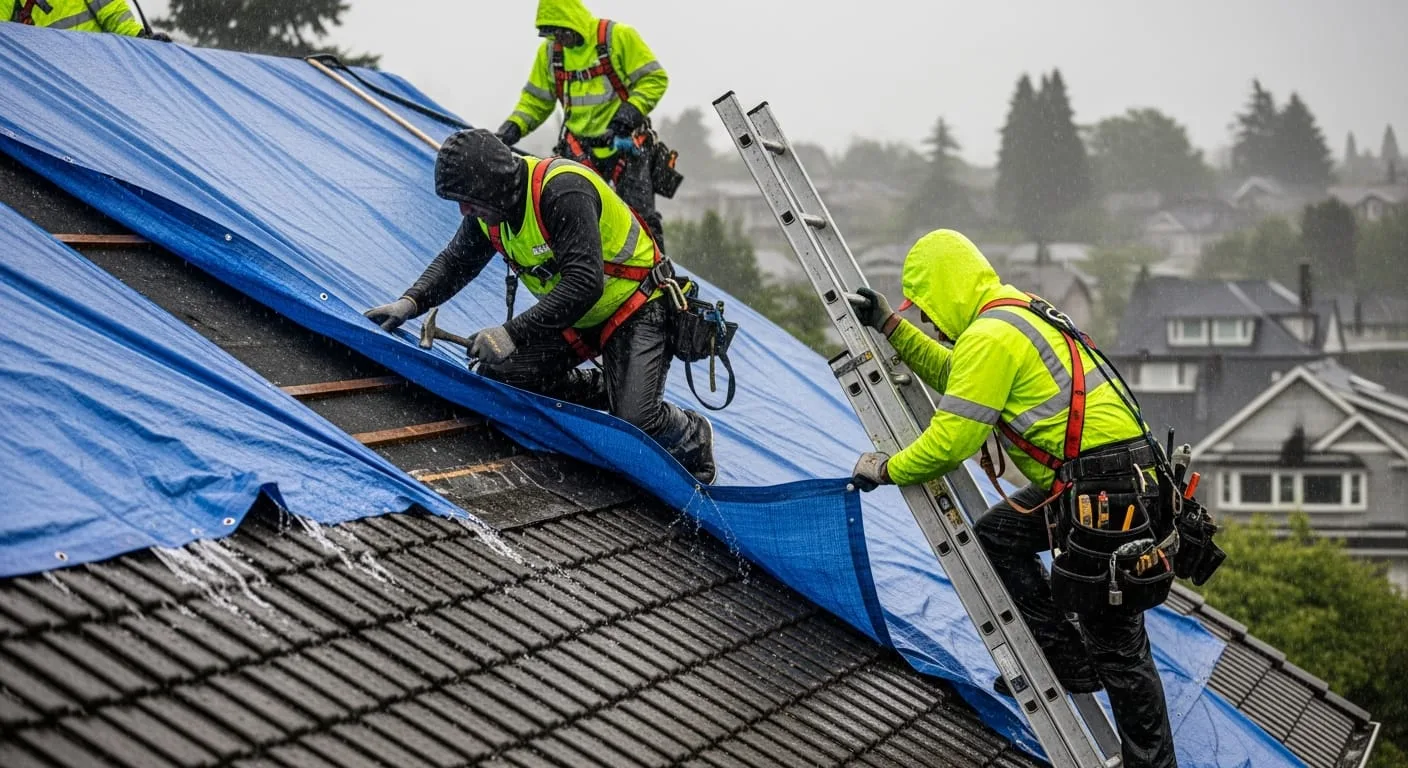
Maple Ridge's practical re-roof window is mid-May through mid-September, slightly shorter than Surrey and roughly comparable to the District of North Vancouver. Elevation sites above 250 metres lose additional shoulder weeks to morning fog and overnight condensation that prevents safe shingle application until 10 or 11 AM through May and September.
A typical 28-unit Albion or Silver Valley complex schedules across 5 to 7 weeks of working time inside the dry window, broken into 4-unit clusters with a 30 percent weather contingency built into the calendar. Councils that insist on a compressed fixed schedule without contingency typically end up with either an October finish in the rain or a contractor walk-off and a re-tender.
Sheathing Replacement Reality on Forested Maple Ridge Sites
Forested Maple Ridge sites uncover deteriorated plywood or OSB sheathing more frequently than flat-land Fraser Valley sites. Typical Silver Valley and Cottonwood sheathing-replacement rates run 8 to 15 percent of roof area on asphalt-over-asphalt re-roofs and 12 to 20 percent on cedar conversions. The 2026 contract should include a written sheathing allowance of 12 to 15 percent at $5.00 to $7.50 per square foot of replaced area, with overages triggering a written change order signed by the council president.
Insurance, Bonding and WorkSafeBC for Maple Ridge
Maple Ridge councils should require $5 million general liability as the minimum bid threshold for any project above 16 units. WorkSafeBC clearance must be current with no outstanding orders, and contractor experience on steep-grade hillside sites should be documented. Insurance carriers have been increasingly responsive to cedar-to-asphalt conversion in the Maple Ridge urban-interface fire zone, with premium reductions of $300 to $700 per door per year at the following renewal — a number worth quoting to owners as part of the conversion business case before the SGM vote.
Depreciation Report Updates for Maple Ridge
Maple Ridge depreciation reports prepared between 2014 and 2019 universally underestimate 2026 re-roof costs by 30 to 50 percent on forested elevation sites because the original reports rarely modeled the elevation wind premium, the moss-suppression detailing, the tree-protection cost or the compressed work window. Councils planning a 2026 to 2028 replacement should commission an updated cost projection — the $1,800 to $4,000 update fee is the cheapest insurance available against a failed SGM vote.
Realistic Maple Ridge Re-Roof Timeline
A typical 28-unit Maple Ridge townhouse re-roof runs 9 to 12 months from first scoping call to project close. Scoping, bid solicitation, council review and SGM vote take 3 to 5 months. Permitting, engineering letters and material lead times add 4 to 8 weeks. Construction runs 5 to 8 weeks inside the dry window. Close-out, warranty registration and deficiency walk-through add 4 to 6 weeks. Councils that begin scoping in the previous fall for the following May-to-September window deliver on schedule almost without exception.
Common Maple Ridge Council Mistakes to Avoid
Across more than 45 Maple Ridge strata re-roofs we have observed several recurring mistakes. First, accepting a flat-land Surrey spec on an elevation Silver Valley or Cottonwood site, then watching wind-driven ridge cap failure begin within 5 years. Second, omitting moss-suppression detailing on forested sites and watching moss return within 3 years. Third, omitting tree-protection requirements from the bid and absorbing damage claims at tear-off. Fourth, scheduling tear-off in May or September on an elevation site and losing weeks to morning fog. Fifth, skipping the insurance broker conversation before the SGM and missing the conversion premium-savings argument that frequently turns the vote.
Talk to a Maple Ridge Strata Roofing Specialist
Strata Roofers BC has delivered more than 45 strata re-roofs across Silver Valley, Albion, Cottonwood, West Maple Ridge and Kanaka Creek since 2014. Fully licensed, insured and bonded with $5 million liability coverage, RCABC-member, and WorkSafeBC compliant on every project. For a no-obligation Maple Ridge scoping conversation including elevation-zone specification review and tree-protection planning, call 604-446-3482 or email admin@budgetroofers.ca.
Frequently Asked Questions
- Does Maple Ridge require a building permit for a strata re-roof?
- Yes for any tear-off-and-replace, assembly change, sheathing replacement above 10 percent of roof area, or ventilation modification. Typical 2026 review time is 3 to 5 weeks.
- What does a 28-unit Silver Valley townhouse re-roof cost in 2026?
- Approximately $255,000 to $325,000 for 22,000 square feet of architectural shingle with moss-suppression detailing, including a 12 percent sheathing contingency, engineering, permits and waste disposal.
- Should we choose asphalt or standing-seam metal on a Silver Valley site?
- Asphalt remains the default below 250 metres elevation. Above 300 metres, standing-seam metal increasingly wins on a 40- to 50-year basis: it sheds snow naturally, eliminates moss replacement cycles, and produces meaningful insurance premium reductions.
- Why do forested Maple Ridge sites need moss-suppression detailing?
- Cedar and Douglas fir canopy drives moss colonization 2 to 4 times faster than flat-land sites. Copper or zinc strip detailing at ridges suppresses moss for the life of the roof and extends realistic service life by 4 to 7 years for a $0.40 to $0.75 per square foot upcharge.
- What is the practical re-roof window in Maple Ridge?
- Mid-May through mid-September in the valley, slightly shorter on elevation sites where morning fog delays daily starts in May and September. Build a 30 percent weather contingency into any Silver Valley or Cottonwood schedule.
Need a free assessment?
Licensed · Insured · Bonded roofing across Metro Vancouver.