Strata Roof Replacement in Surrey, BC: A 2026 Council Guide
Published June 17, 2026 · Updated June 17, 2026
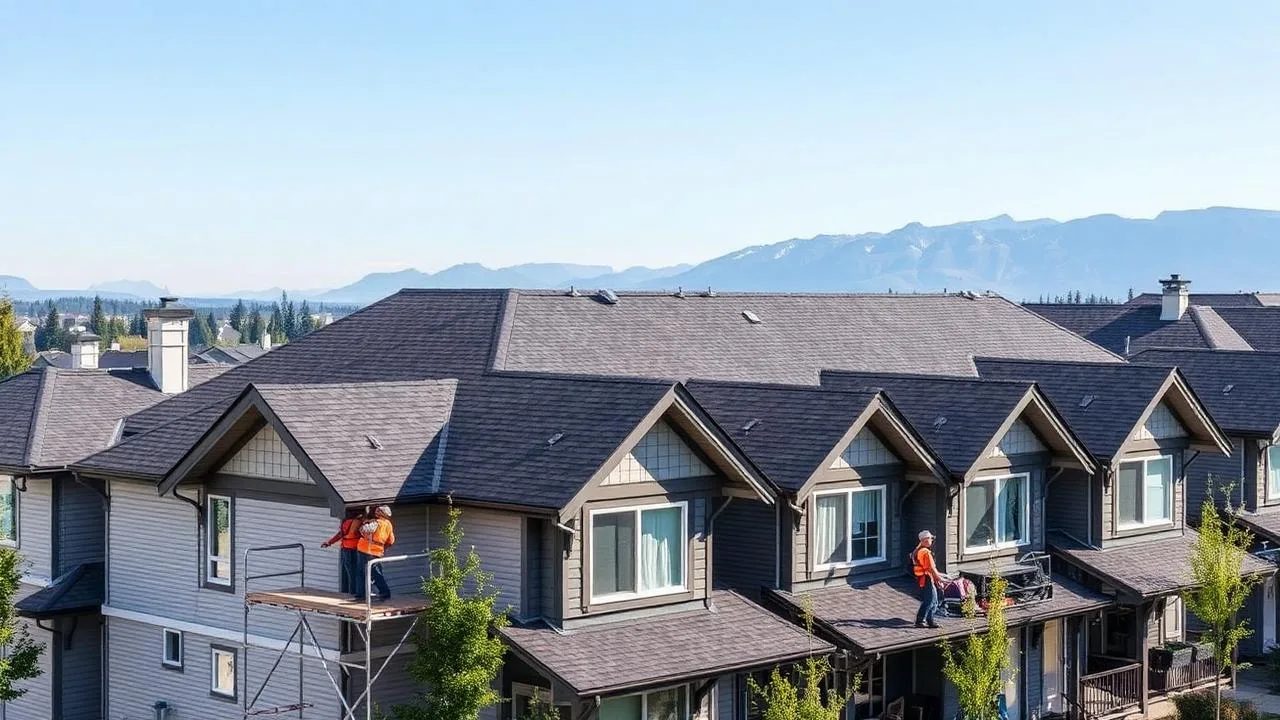
Surrey has more stratified townhouse complexes than any other municipality in British Columbia, and by 2026 a large share of that stock — built between 1995 and 2010 across Guildford, Fleetwood, Newton, Cloverdale and South Surrey — is reaching the end of its original asphalt shingle service life simultaneously. This guide is written for Surrey strata councils planning a 2026 or 2027 roof replacement, with realistic pricing, the City of Surrey permit workflow, and the operational details that separate projects that finish on budget from projects that don't.
Why Surrey Re-Roofs Are Different From the Rest of Metro Vancouver
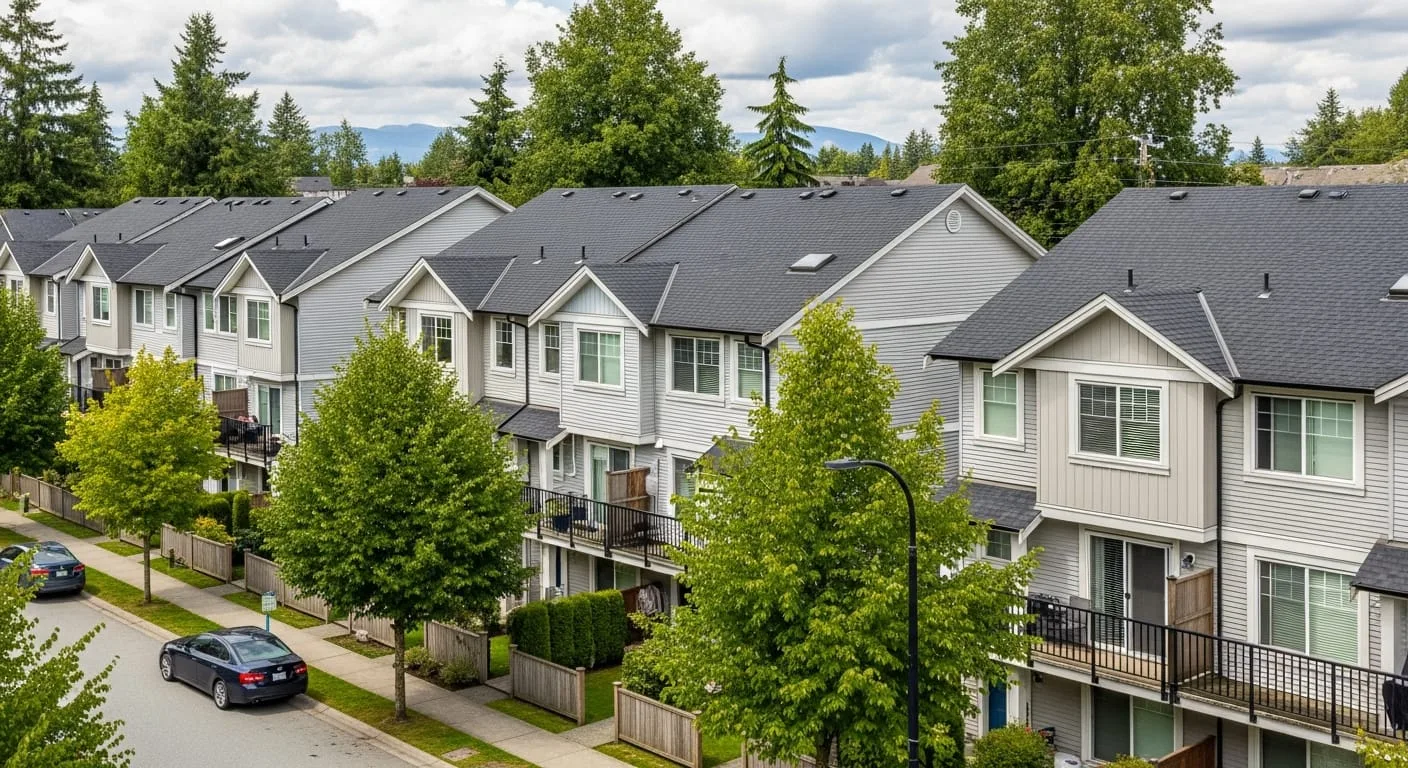
Three Surrey-specific factors shape every re-roof decision. First, the building stock is overwhelmingly wood-frame townhouse — typically 16 to 60 units per complex with steeper, more articulated rooflines than condo flats. Second, Surrey sits in a higher wind-exposure zone than Vancouver proper, with prevailing south-westerlies driving up the BC Building Code wind-load requirements at ridges, hips and eaves. Third, Surrey's permit and inspection turnaround in 2026 is one of the fastest in Metro Vancouver, which compresses the front-end timeline and rewards councils that mobilize quickly.
The combined effect is that Surrey councils typically pay less per square foot than Vancouver or North Shore councils for comparable work, but they pay a steeper premium for any contractor who under-specifies wind-resistance detailing or under-prices the steeper-roof labour reality.
Realistic 2026 Cost Ranges for Surrey Strata
- Architectural asphalt shingle tear-off and replacement: $9.50 to $12.50 per square foot of roof area
- Premium 40-year laminated shingle with copper moss strip detail: $11.50 to $14.50 per square foot
- Cedar shake to asphalt conversion (Cloverdale, South Surrey older stock): $13.50 to $17.00 per square foot
- SBS torch-on flat membrane on attached carport or amenity roofs: $17.00 to $22.00 per square foot
- Sheathing replacement allowance (typical Surrey damage rate 5 to 12 percent): $5.00 to $7.50 per square foot of replaced area
A typical 36-unit Guildford or Fleetwood townhouse complex with roughly 28,000 square feet of roof area should budget between approximately $290,000 and $375,000 for an architectural shingle re-roof in 2026, including a 10 percent sheathing contingency, engineering, permits and waste disposal. Cloverdale and South Surrey cedar conversions typically land 15 to 25 percent higher because of tear-off labour and disposal weight.
City of Surrey Permits and Inspections
Surrey requires a building permit for any strata roof replacement that involves more than simple re-cover, including any tear-off-and-replace project, any sheathing replacement above 10 percent of roof area, any change in roof assembly type (cedar to asphalt, asphalt to metal), and any ventilation modification. Applications require manufacturer documentation, a waste-management plan, WorkSafeBC notice of project and — for cedar conversions — a sealed engineer's letter confirming structural adequacy for the heavier asphalt load.
Surrey permit turnaround in 2026 is typically 2 to 4 weeks for a complete submission, materially faster than Vancouver or the District of North Vancouver. The City has been active on WorkSafeBC fall-protection enforcement on multi-building strata sites since 2024, and complexes above 2 storeys now routinely require engineered fall-protection plans rather than basic anchor-point letters.
Wind-Load Detailing for Surrey's Exposure Zone
Surrey sits in a higher BC Building Code wind-pressure zone than central Vancouver, particularly the South Surrey, White Rock and Cloverdale catchments. The practical consequence is that ridge cap, hip and rake detailing has to meet a 130 mph high-wind warranty standard rather than the 110 mph minimum that satisfies inner Vancouver inspectors. Contractors who import an inner-Vancouver spec into Surrey produce roofs that pass initial inspection but lift granules and ridge caps within 4 to 7 years under the seasonal southwesterlies.
The right Surrey asphalt specification in 2026 is a Class 4 impact-rated, 130 mph wind-warranty architectural shingle with 6-nail fastening at all field shingles, hand-sealed starter strips at every eave and rake, and high-profile ridge caps mechanically fastened over a continuous ridge vent. The incremental cost over an inner-Vancouver spec is roughly $0.35 to $0.65 per square foot and is the single best-value upgrade in any Surrey re-roof scope.
Working Around Surrey's Townhouse Logistics
Surrey townhouse complexes typically have wider drive aisles and more parking than older Vancouver projects, which simplifies dump-trailer staging and material delivery. But the larger unit counts — 30 to 60 doors is common — mean owner-communication infrastructure has to scale. The minimum effective communication package for a Surrey re-roof includes a project-specific email list, a weekly written update every Friday, a single project phone number, a posted building-sequence map, and a clear policy on vehicle relocation during each building's active work week.
Most successful Surrey re-roofs sequence the work in 4- to 6-unit clusters with a 5-day active window per cluster: tear-off Monday, dry-in Monday afternoon, underlayment and ice-and-water shield Tuesday, shingles Wednesday and Thursday, ridge, vents and clean-up Friday. Owners receive 14 days written notice of their building's start date, with a 48-hour confirmation the prior Friday.
Cedar Conversion in Cloverdale and South Surrey
The original 1990s cedar shake complexes in Cloverdale and South Surrey are the dominant cedar-to-asphalt conversion market in 2026. The conversion business case rests on three factors: insurance premium reduction (typically $250 to $600 per door per year at the following renewal), Class A fire rating improvement in the urban-interface risk envelope, and elimination of the ongoing cedar maintenance and moss-control costs that cedar buildings carry whether or not the council budgets for them.
The conversion requires a sealed structural engineer's letter, a Surrey building permit, and an asphalt product specified with the heavier wood-frame Surrey load and wind exposure in mind. The right product is the same 40-year, 130 mph, Class 4 architectural shingle described above, with copper or zinc strip detailing at ridges to suppress the moss return that surrounding evergreens will otherwise drive within 4 years.
Sheathing Damage in Surrey: What to Budget
Sheathing damage rates on Surrey tear-offs run 5 to 12 percent of roof area on asphalt-over-asphalt re-roofs and 10 to 18 percent on cedar-to-asphalt conversions. The 2026 contract should include a written sheathing allowance at $5.00 to $7.50 per square foot of replaced area, with overages above the allowance triggering a written change order signed by the council president, not by an owner on site. Contracts that omit the allowance and quote sheathing on a per-sheet basis at tear-off are the single most common source of post-project disputes in the Fraser Valley.
Insurance, Bonding and WorkSafeBC for Surrey Projects
Surrey councils should require $5 million general liability coverage as the minimum bid threshold for any project above 20 units, with a $10 million minimum for projects above 50 units or any project that includes flat-membrane work on attached amenity buildings. WorkSafeBC clearance must be current with no outstanding orders, and the contractor's bonding capacity should comfortably exceed the project value.
Councils should request the contractor's full WorkSafeBC employer summary, not just the clearance letter, before recommending a bid. Surrey's WorkSafeBC inspectors have been particularly active on multi-building strata sites since 2024, and a contractor with a recent serious-incident history on similar work is a risk concentration the council should decline to accept.
Depreciation Report Reality for Surrey Councils
Most Surrey strata depreciation reports prepared between 2014 and 2019 underestimate 2026 re-roof costs by 25 to 45 percent, primarily because the original reports did not anticipate the post-2021 labour and asphalt-product cost inflation. Councils relying on the original report's allowance to size the special levy are routinely surprised at the contract-signing stage.
Before issuing any SGM notice, commission an updated cost projection from the contractor or from the depreciation report consultant. The $1,500 to $3,500 update fee is the cheapest insurance available against a failed SGM vote and the most common preventable cause of a slipped Surrey re-roof project.
Realistic Surrey Re-Roof Timeline
A typical 36-unit Surrey townhouse re-roof in 2026 runs 8 to 11 months from first scoping call to project close. Scoping, bid solicitation, council review and SGM vote take 3 to 4 months. Permitting and material lead times add 4 to 6 weeks. Construction runs 5 to 8 weeks depending on weather and building count. Close-out, warranty registration and deficiency walk-through add 4 to 6 weeks.
Councils that begin scoping in the previous fall for a May-to-September construction window deliver on schedule almost without exception. Councils that begin in late winter for the same window typically slip into October and pay weather-contingency premiums.
Common Surrey Council Mistakes to Avoid
Across more than 80 Surrey strata re-roofs we have observed several recurring council mistakes. First, accepting a Vancouver-spec shingle that does not meet Surrey's wind-load reality. Second, omitting the written sheathing allowance and absorbing 25 to 40 percent contract overages at tear-off. Third, awarding to the lowest bidder without confirming current WorkSafeBC clearance and full liability documentation. Fourth, under-communicating the building-by-building sequence to owners and absorbing repeated complaints that delay vehicle relocation and slow the project. Fifth, scheduling tear-off into late September or October and losing days to Fraser Valley rain.
Each is preventable with a disciplined front-end process and a contracting partner who has delivered comparable work in the same Surrey catchment.
Talk to a Surrey Strata Roofing Specialist
Strata Roofers BC has delivered more than 80 strata re-roofs across Guildford, Fleetwood, Newton, Cloverdale and South Surrey since 2014. Fully licensed, insured and bonded with $5 million liability coverage, RCABC-member, and WorkSafeBC compliant on every project. For a no-obligation Surrey scoping conversation including a written wind-zone spec review and sheathing-damage forecast, call 604-446-3482 or email admin@budgetroofers.ca.
Frequently Asked Questions
- Does Surrey require a building permit for a strata re-roof?
- Yes for any tear-off-and-replace, any assembly change (cedar to asphalt), any sheathing replacement above 10 percent of roof area, and any ventilation modification. Typical 2026 review time is 2 to 4 weeks for a complete submission.
- What does a 36-unit Surrey townhouse re-roof cost in 2026?
- Approximately $290,000 to $375,000 for 28,000 square feet of architectural shingle roofing, including a 10 percent sheathing contingency, engineering, permits and waste disposal. Cloverdale and South Surrey cedar conversions run 15 to 25 percent higher.
- Do Surrey roofs need a different shingle spec than Vancouver?
- Yes. Surrey sits in a higher wind-pressure zone than central Vancouver. Specify a 130 mph high-wind warranty product with 6-nail fastening, hand-sealed starter, and mechanically fastened high-profile ridge caps. The upcharge over an inner-Vancouver spec is roughly $0.35 to $0.65 per square foot.
- Why convert from cedar to asphalt in Cloverdale or South Surrey?
- Insurance premium reductions of $250 to $600 per door per year, Class A fire rating in the urban-interface zone, and elimination of cedar maintenance costs. The conversion typically pays back the premium delta within 6 to 10 years.
- When should a Surrey council start scoping a 2027 re-roof?
- Begin scoping in fall 2026 for a May-to-September 2027 construction window. Councils that start in late winter for the same year routinely slip into October and absorb weather-related premiums.
Need a free assessment?
Licensed · Insured · Bonded roofing across Metro Vancouver.